Manual performance tracking is costing your team thousands of hours and buried insights. Performance monitoring automation uses AI and robotic process automation to watch your systems, applications, and business metrics 24/7—catching problems before they cascade and turning raw data into decisions you can act on immediately. Discover how teams are shifting from reactive firefighting to proactive optimization.
Performance monitoring automation is the strategic deployment of software tools, AI-driven platforms, and robotic process automation (RPA) to continuously track, analyze, and report on a wide spectrum of performance metrics. This encompasses not just technical systems and applications, but also critical business metrics and even employee performance, all without the need for constant manual intervention. For tech enthusiasts and vibecoders deeply invested in AI and automation, these solutions represent a paradigm shift. They integrate seamlessly with existing infrastructure, including CI/CD pipelines, CRM systems, HR databases, and financial systems, to distill vast amounts of raw data into actionable insights.
Benefits of Performance Monitoring Automation
The benefits of embracing performance monitoring automation are profound. Enhanced accuracy and efficiency are paramount. By automating data collection and analysis, organizations can eliminate reliance on error-prone manual spreadsheets and labor-intensive tasks that historically consumed thousands of person-hours annually. Automated systems connect directly to existing applications, importing data on predefined schedules to ensure consistently current metrics. This frees up valuable human capital, allowing teams to shift their focus from routine maintenance and data wrangling to strategic improvements and innovation.
Software Development
In software development, performance testing automation is a game-changer. It guarantees repeatable test conditions under simulated user workloads, enabling early identification of bottlenecks within agile and CI/CD environments. This proactive approach optimizes scalability, speed, and resource utilization, preventing issues from impacting production and degrading user experience.
Real-time Oversight
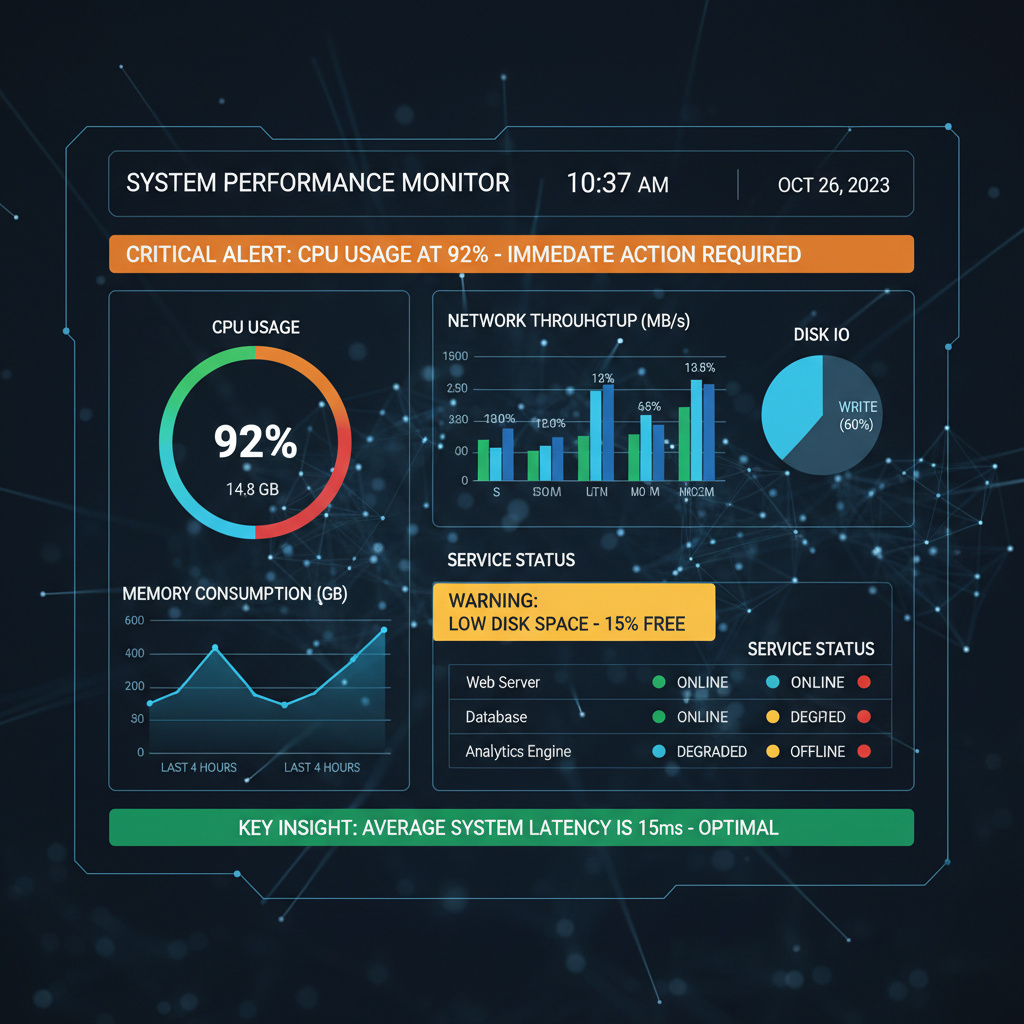
Real-time oversight is another cornerstone advantage of performance monitoring automation. Continuous monitoring capabilities allow for instant detection of anomalies, potential compliance risks, and performance deviations. AIOps platforms offer unparalleled observability across complex IT environments. By correlating data from disparate sources, they facilitate rapid root cause analysis, significantly reducing the mean time to resolution (MTTR). This capability transforms IT teams from reactive firefighters to proactive solution deployers, ensuring high availability and adherence to stringent service level agreements (SLAs) like 99.99%.
Business Metrics and Reporting
For business metrics, automated reporting transforms raw data into dynamic dashboards and executive alerts. When key performance indicators (KPIs) cross predefined thresholds, stakeholders are notified immediately, allowing for swift, agile responses. This transforms complex data landscapes into intuitive visuals, making early issue spotting and decisive action far more accessible.
Employee and Sales Performance
In the context of employee and sales performance, automation brings objectivity and continuous improvement. It facilitates ongoing feedback, ensures goal alignment, and provides real-time progress tracking based on objective data rather than subjective evaluations. Performance management platforms can automate scheduling, send reminders, aggregate data from multiple sources, and generate customized reports. This promotes fairness, significantly reduces administrative workload, and boosts overall productivity by aligning individual goals with overarching organizational objectives.
Integration and KPI Tracking
The integration of automation extends deeply into KPI tracking and analytics, centralizing data into a strategic hub. This unified source of truth visualizes precisely how daily operational activities contribute to broader business goals. This capability fuels automated reporting with proactive notifications and dynamic presentations, ensuring that all stakeholders are working with accurate, up-to-date information during critical reviews and strategic planning sessions.
Challenges and Future Trends
While the advantages are clear, implementing performance monitoring automation does present challenges. Initial integration with legacy systems can be complex, requiring careful planning. Customization to specific metrics is also a consideration, as off-the-shelf solutions may need adaptation to fit unique business needs. Ensuring robust data security within automated workflows is critical. However, modern platforms are increasingly designed to mitigate these concerns through seamless API connections and compliance-focused monitoring features.
Looking ahead, trends in performance monitoring automation point toward deeper AI integration. AIOps is evolving rapidly, with machine learning models becoming adept at predicting potential issues before they arise. Hyperautomation, combining RPA with advanced analytics and AI, is set to streamline end-to-end business processes. Case studies consistently highlight tangible return on investment (ROI), including unified monitoring for SLA compliance and enhanced decision-making capabilities.
In conclusion, the shift from manual performance tracking to automated solutions is no longer a luxury but a necessity for businesses aiming to thrive in today’s data-intensive landscape. By embracing performance monitoring automation, organizations unlock unprecedented levels of efficiency, accuracy, and strategic insight. The future of performance is automated, intelligent, and continuously evolving, offering a clear path to sustained growth and operational excellence.
Book a 15 minute discovery call to find out more today at https://digifidelis.com/calendar/