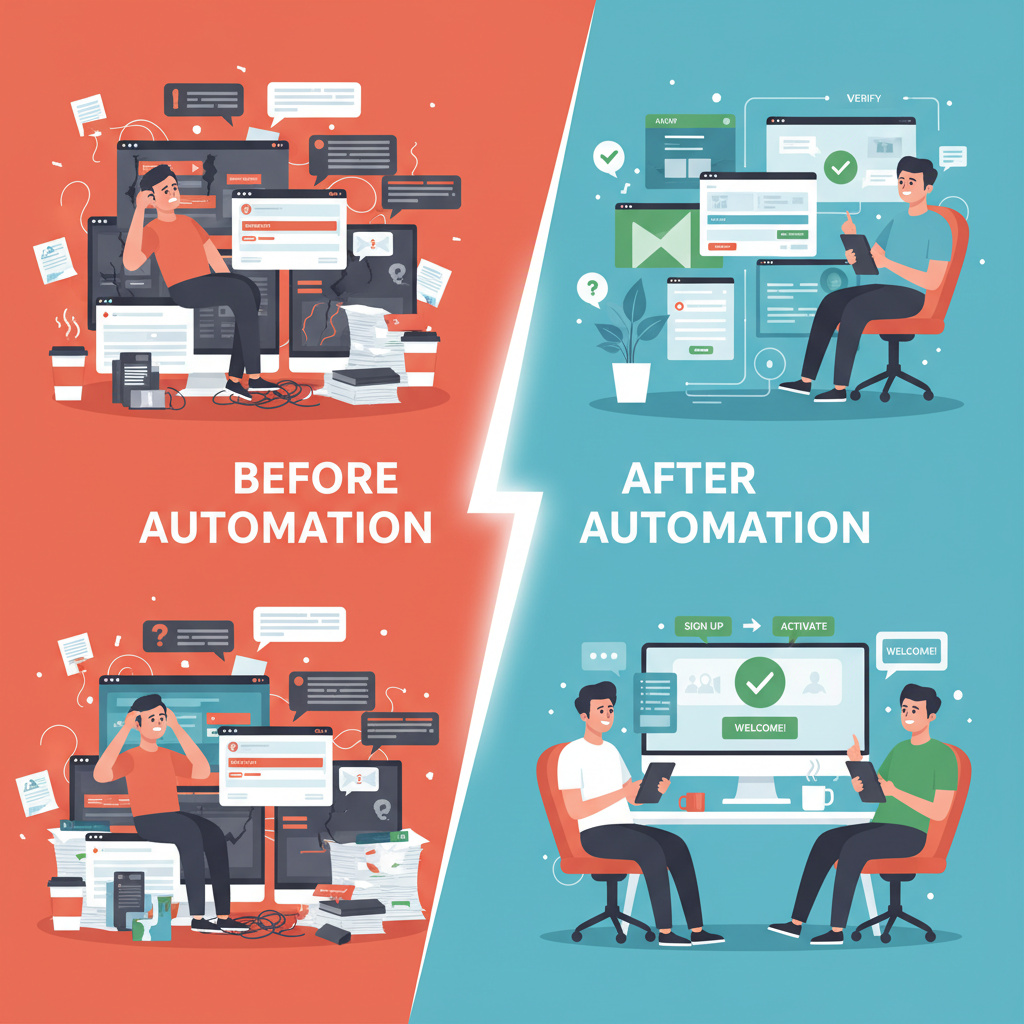
Manual onboarding wastes weeks and frustrates new hires before they’ve written a single line of code. When you automate training workflows with AI, you compress delays into days, personalize learning paths in real time, and let your team focus on what matters: building. This is how forward-thinking tech companies are turning onboarding from a bottleneck into a competitive edge.
What is Training and Onboarding Automation?
Training and onboarding automation is more than just a buzzword; it’s a fundamental shift in how organizations integrate new talent. By leveraging sophisticated software, artificial intelligence, and streamlined workflows, companies can dramatically reduce the administrative burden associated with bringing new employees into the fold. This approach not only frees up valuable HR resources but also significantly boosts retention, productivity, and overall engagement, particularly for tech-savvy audiences who appreciate efficiency and innovation.
The Core Benefits of Automated Onboarding
The core benefits of adopting automated onboarding are compelling. Research indicates that employees who experience effective onboarding are 69% more likely to remain with a company for at least three years. Furthermore, automated processes, especially those enhanced by AI personalization, can slash the time it takes for new hires to become fully productive by up to 70%. Companies that have embraced automated onboarding report substantial improvements, including 52% boosts in retention rates and 60% gains in productivity. This is often coupled with a 54% increase in employee engagement, demonstrating a clear return on investment.
Key Components of an Automated Onboarding Workflow
A comprehensive automated onboarding workflow can encompass a wide array of tasks. This includes the seamless distribution of essential paperwork, the secure handling of e-signatures, the timely delivery of welcome emails, and the efficient scheduling of orientation sessions. Beyond initial introductions, automation can facilitate mentor pairing, streamline enrollment in e-learning modules, manage stakeholder notifications, and deploy feedback surveys to gather crucial insights. IT provisioning, encompassing device allocation and role-based access controls, can also be automated, ensuring new hires have the tools and permissions they need from day one.
AI’s Role in Enhancing Onboarding
For tech enthusiasts, the integration of AI into onboarding is particularly exciting. Approximately 50% of HR professionals believe that AI can significantly improve the onboarding experience through personalized learning paths. This AI-driven personalization helps reduce cognitive overload for new hires and has been shown to boost first-year retention rates by as much as 30%. Generative AI chatbots provide instant support for common questions, freeing up human resources for more complex interactions. In remote work environments, AI maintains human connection and engagement through dynamic virtual experiences.
The 4Cs of Effective Automated Onboarding
Effective implementation of automated onboarding often follows the principles of the 4Cs: Compliance, Clarification, Culture, and Connection. Automation can replicate these elements at speed. Compliance involves ensuring all necessary policies and legal requirements are met through automated document distribution and acknowledgment. Clarification focuses on role-specific training, which can be delivered through automated learning modules and task assignments. Culture is fostered by providing automated access to company values, mission statements, and team introductions. Connection is facilitated through automated scheduling of meet-and-greets, mentor introductions, and team-building activities.
Addressing the Challenges of Manual Onboarding
The challenges inherent in manual onboarding processes are stark. These include significant delays in getting new hires up to speed, inconsistencies in the information provided, and increased stress for both new employees and the HR team. Studies show that as many as 40% of new hires wait too long for responses from HR, and one in three report having an underwhelming onboarding experience. Automated onboarding directly counters these issues by providing essential productivity tools on day one and offering proactive support.
Enterprise Success with Automated Onboarding
Enterprise examples underscore the transformative impact of automation. A significant 62% of businesses that have implemented automated onboarding programs report achieving higher time-to-productivity for their new hires. This contrasts sharply with the fact that only 12% of employees rate traditional onboarding experiences as great, highlighting the clear advantage of automated solutions.
The Future of Onboarding: AI and Predictive Analytics
Looking ahead, the trend toward accelerating AI adoption in onboarding is undeniable. Generative AI tools are poised to close existing experience gaps, while predictive analytics will help forecast and mitigate potential bottlenecks. Companies that embrace these advancements early will position themselves ahead of the curve in the ongoing talent wars, attracting and retaining top performers by offering superior onboarding experiences.
In conclusion, the shift towards AI-powered training and onboarding automation is not merely an operational upgrade; it’s a strategic imperative for modern tech companies. By automating repetitive tasks, personalizing learning journeys, and ensuring a consistent, engaging experience, organizations can dramatically reduce time-to-productivity, boost retention, and foster a more engaged workforce.
Book a 15 minute discovery call to find out more today at https://digifidelis.com/calendar/