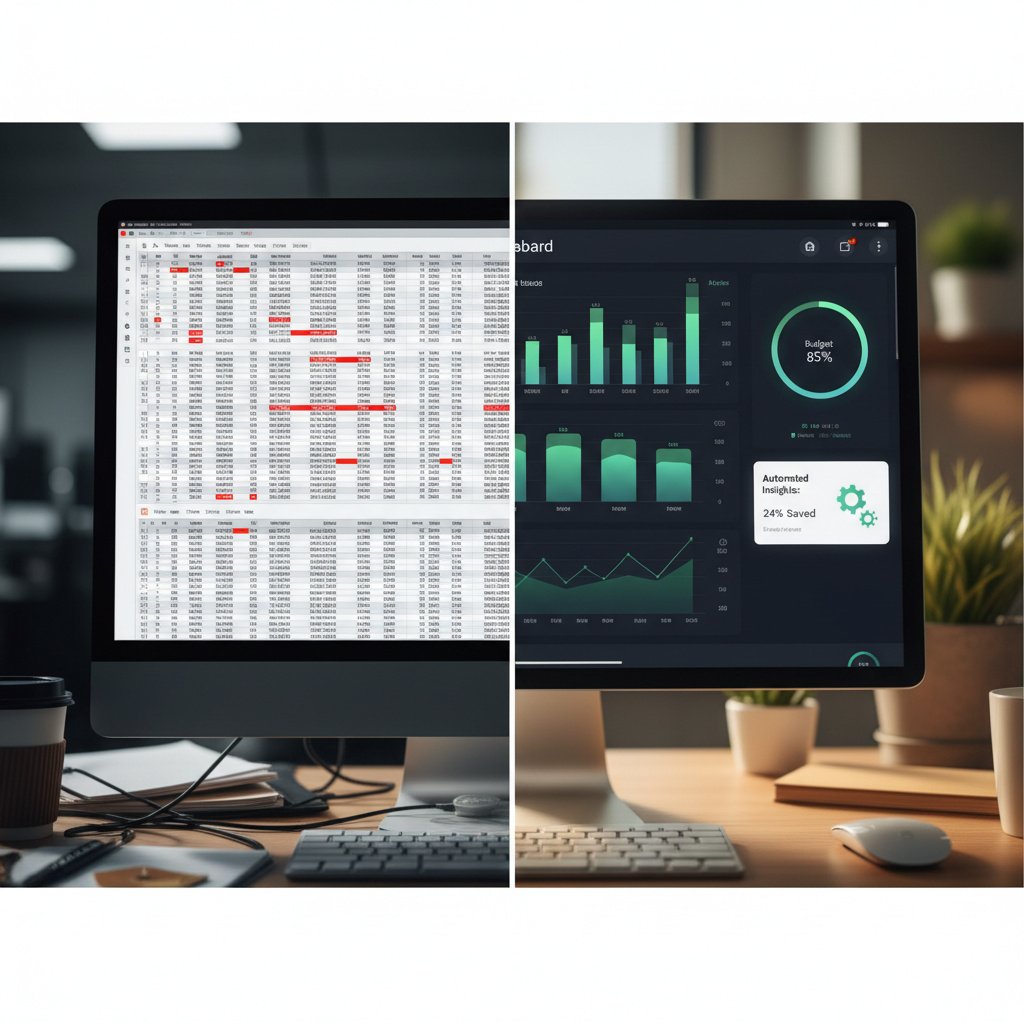
Spreadsheets and manual expense logs drain hours every month—time you could spend on strategy instead of data entry. Budget automation removes the friction from financial tracking, giving you real-time visibility into spending patterns while your system does the heavy lifting. Discover how intelligent automation reshapes cash flow management for tech-forward teams and individuals.
The traditional approach to personal and business finance is fundamentally broken. For years, the standard advice has been to sit down on a Sunday evening, open a spreadsheet, and manually categorize every transaction from the past week. This process is not only tedious but also flawed due to human error and the inevitable delay between spending and recording. In an era where we can automate server deployments, code testing, and customer outreach, continuing to track finances manually is a relic of the past. Budget automation is the logical next step for anyone who values efficiency and precision.
By implementing robust expense automation, you shift your role from a data entry clerk to a financial strategist. When your systems handle the ingestion and categorization of transactions, you gain the ability to analyze trends rather than just recording history. This transition is essential for tech enthusiasts and vibecoders who understand that time is the most valuable currency. When you stop worrying about whether you logged that coffee purchase correctly, you start focusing on how your capital allocation aligns with your long-term goals.
Integrating Financial Data Streams
The core of effective budget management today lies in the integration of financial data streams. Modern financial tracking tools leverage APIs to pull data directly from your bank accounts, credit cards, and investment platforms. This eliminates the need for manual input and ensures that your financial dashboard is always accurate. With automated reporting, you can generate insights on your cash flow, burn rate, or discretionary spending with a single click. These systems do not just store data; they interpret it, offering visual representations of your financial health that spreadsheets simply cannot match.
Benefits for Teams
For teams, the benefits of automated financial systems are even more pronounced. Manual expense logs are a common point of friction in corporate environments, leading to delayed reimbursements and inaccurate budget forecasting. By adopting an automated workflow, teams can enforce spending policies at the point of transaction. This proactive approach to budget management ensures that every dollar is accounted for in real-time, reducing the administrative burden on finance departments and empowering employees to make informed spending decisions.
Shifting Your Mindset
The transition to automated systems requires a shift in mindset. It is not just about choosing a piece of software; it is about building a financial architecture that works for you. Start by auditing your current financial stack. Identify the manual touchpoints that consume the most time and look for tools that offer deep integration with your existing accounts. Whether you are using a personal finance app that syncs with your bank or a complex enterprise resource planning system, the goal is to create a seamless flow of data that requires minimal human intervention.
High-Frequency Analysis
One of the most significant advantages of this shift is the ability to conduct high-frequency analysis. When your financial tracking is automated, you are no longer limited to monthly reviews. You can monitor your spending patterns on a daily or even hourly basis. This level of granularity is invaluable for identifying leaks in your budget. Perhaps you notice that a specific subscription service has increased its pricing, or that your cloud infrastructure costs are trending upward unexpectedly. With automated reporting, these anomalies are flagged immediately, allowing you to take corrective action before they impact your bottom line.
The Rise of AI in Finance
Furthermore, the rise of artificial intelligence in financial tools has taken budget automation to the next level. Modern platforms can now predict future spending based on historical data, helping you forecast your cash flow with remarkable accuracy. This predictive capability allows for better planning, whether you are saving for a major investment or managing the operational budget of a growing startup. By leveraging these intelligent systems, you can move from reactive budgeting to proactive financial planning.
Addressing Security Concerns
Security is often a concern when discussing the automation of financial data, but the industry has made significant strides in this area. Most reputable financial automation tools utilize bank-level encryption and read-only access to your accounts. This means your data is protected while still being accessible to the algorithms that drive your budget management. For the tech-savvy individual, understanding these security protocols is part of the due diligence process, but it should not be a barrier to adopting more efficient workflows.
Reducing Cognitive Load
As you begin to integrate these tools, remember that the goal is to reduce cognitive load. The best financial systems are those that operate in the background, surfacing insights only when necessary. You should not be spending your time managing your budget; your budget should be managing itself, providing you with the clarity needed to make strategic decisions. This is the essence of modern financial management: removing the friction, increasing visibility, and focusing on the growth of your resources.
Ultimately, the move toward automation is about reclaiming your time. Every hour spent manually reconciling accounts is an hour lost to innovation or personal development. By embracing budget automation, you are not just optimizing your finances; you are optimizing your life. You are creating a system that supports your ambitions rather than one that demands your constant attention.
In conclusion, the era of manual expense logging is coming to an end. By leveraging budget automation, you gain the power to manage your finances with the same precision and efficiency you apply to your technical projects. Through the integration of intelligent tools, automated reporting, and real-time financial tracking, you can transform your relationship with money. Stop the manual grind, embrace the power of automation, and start building a financial future that is as dynamic and forward-thinking as your career.
Book a 15 minute discovery call to find out more today at https://digifidelis.com/calendar/