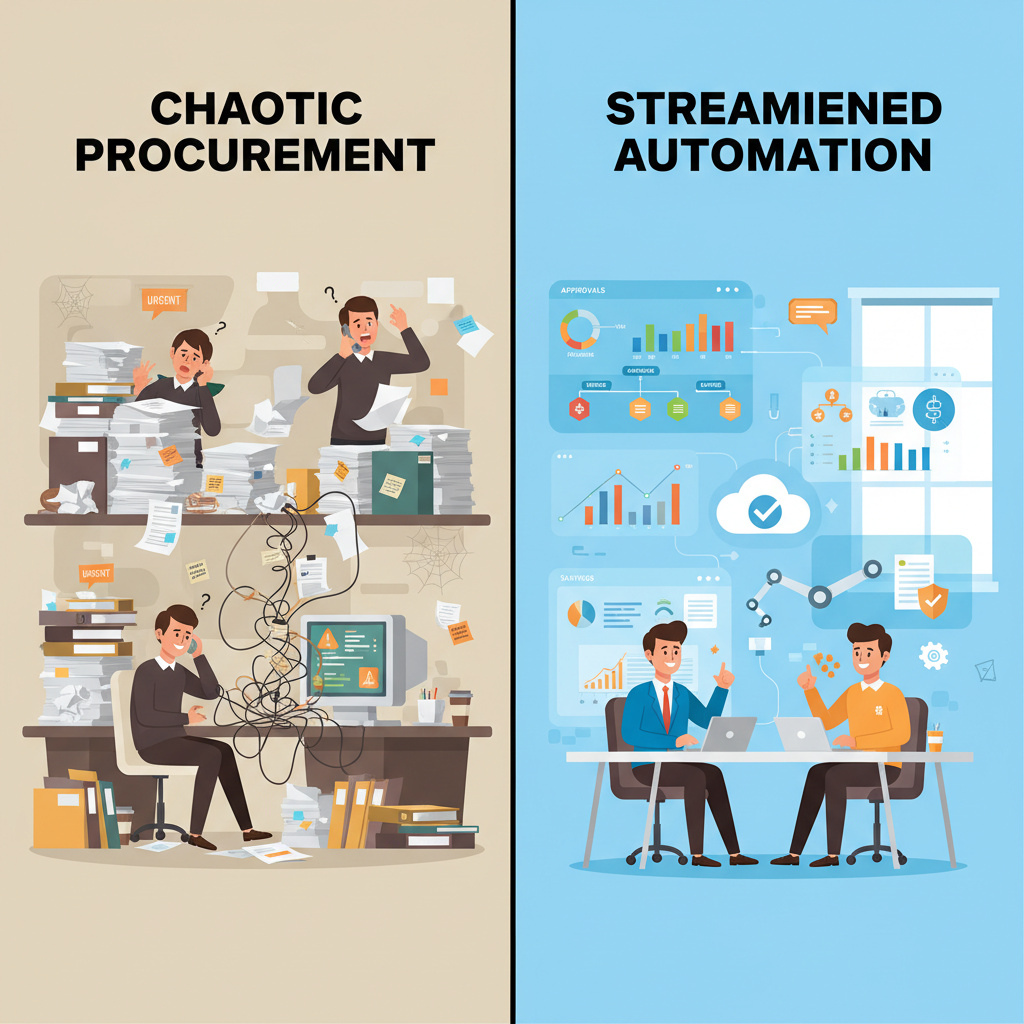
Procurement teams often find themselves drowning in repetitive tasks like vendor onboarding, invoice validation, and compliance checks. These time-consuming processes account for up to 70% of their work hours, leaving little room for strategic initiatives. Enter vendor management automation—a game-changer that promises to transform how businesses manage their supplier ecosystems.
Vendor management automation leverages AI-driven tools and software platforms to streamline every aspect of vendor relations. For tech enthusiasts and vibecoders, this isn’t just about digitizing paperwork; it’s about creating a seamless, predictive operational environment. Imagine replacing scattered spreadsheets and endless email threads with a unified dashboard that provides real-time insights on everything from supplier performance to contract renewals.
Efficiency Gains and Real-Time Visibility
The efficiency gains are staggering. For instance, automated vendor onboarding eliminates days of manual form-filling by enabling suppliers to upload documents and complete compliance checks through self-service portals. This simple shift reduces data entry errors by up to 80% and accelerates time-to-market for new products. Beyond onboarding, automated invoice validation ensures purchases align with contracts, flagging discrepancies before payments are made. The result? Cycle times slashed by 30-50% and procurement professionals freed to focus on high-value activities like forging innovative supplier partnerships.
Real-time visibility is another cornerstone of procurement automation. Centralized databases store comprehensive vendor information, accessible via intuitive dashboards. Teams can effortlessly monitor key metrics like delivery rates and pricing adherence, while custom alerts signal potential issues before they escalate. During the global chip shortage, companies with automated vendor systems adapted their sourcing strategies faster, minimizing disruptions compared to those relying on manual processes.
Risk Mitigation and Cost Savings
Risk mitigation is a critical advantage of vendor management automation. Traditional compliance checks are often reactive and prone to error, but automation integrates continuous monitoring into everyday workflows. AI algorithms, for example, can scan vendor activities against regulations like GDPR, automatically flagging non-compliant transactions. This proactive approach significantly reduces the risk of costly fines and ensures smoother operations.
Consider fraud prevention: automated systems cross-verify invoices against approved vendor lists, catching anomalies like duplicate submissions. This not only protects cash flow but also unlocks early payment discounts, enhancing financial health. A Forrester report found that organizations using such tools experienced a 15-25% drop in procurement costs, demonstrating the tangible benefits of risk-averse efficiencies.
Cost savings extend beyond risk reduction. By automating repetitive tasks, vendor management systems enable procurement teams to reclaim up to 70% of their time for strategic endeavors. Administrative overhead decreases as software manages invoice processing and performance reviews with minimal human intervention. Integration with ERP systems like SAP or Oracle further eliminates data silos, preventing costly errors and ensuring smooth operations.
Quantifying these benefits, a Forrester study revealed that adopters of vendor management automation achieve 15-25% reductions in total procurement spend, with ROI realized within 12-18 months. Take Acme Corp, for example. Before automation, their procurement cycle averaged 45 days, resulting in $2 million in annual rework costs. Post-automation, cycle times dropped to 20 days, errors fell by 60%, and vendor satisfaction scores soared, leading to better terms and priority access during shortages.
Enhanced Vendor Relationships and Key Features
Enhanced vendor relationships are another key outcome. Automated reminders for payments and milestones build trust and reliability, while self-service portals empower suppliers to manage their own submissions. This reduces communication gaps and fosters partnerships centered on collaboration. Objective KPI tracking, driven by automated reporting, shifts discussions from disputes to value creation.
Key features of vendor management automation include workflow engines for approvals, AI analytics for performance forecasting, and robust integrations with CRM and accounting tools. Platforms like NetSuite and TrustLayer exemplify this, offering modular designs that cater to businesses of all sizes. For SMEs, low-code options allow vibecoders to customize automations easily, while larger enterprises benefit from API-driven connections to legacy systems.
The Future and Implementation of Automation
Looking ahead, AI’s evolution promises even greater advancements. Predictive analytics will soon enable businesses to foresee supply chain disruptions by analyzing global events and vendor data. Low-code platforms will empower teams to create custom solutions for tasks like RFP standardization. The future of vendor management automation is bright, with trends like sustainable sourcing and ESG compliance tracking on the horizon.
However, challenges remain. Large vendor bases often struggle with fragmented data, leading to inefficiencies. Delayed payments can strain relationships, while manual approvals introduce fraud risks. Vendor management automation addresses these issues by consolidating data and enforcing standardized processes.
To implement successfully, start by mapping current workflows to identify bottlenecks. Choose tools that align with your needs—prioritize AI for risk-heavy operations or workflow automation for efficiency. Begin with a pilot program focused on onboarding, measuring success through key performance indicators like cycle time reduction. Gradually expand to full-scale automation, ensuring training and support for seamless adoption.
Conclusion
In today’s volatile supply chain landscape, vendor management automation isn’t just an option—it’s a necessity. By delivering cost reductions, sharper risk controls, and stronger partnerships, it empowers procurement teams to thrive in uncertainty. For those passionate about automation, this is where AI truly transforms business operations. Embrace it now to stay ahead of the competition.
Book a 15 minute discovery call to find out more today at https://digifidelis.com/calendar/