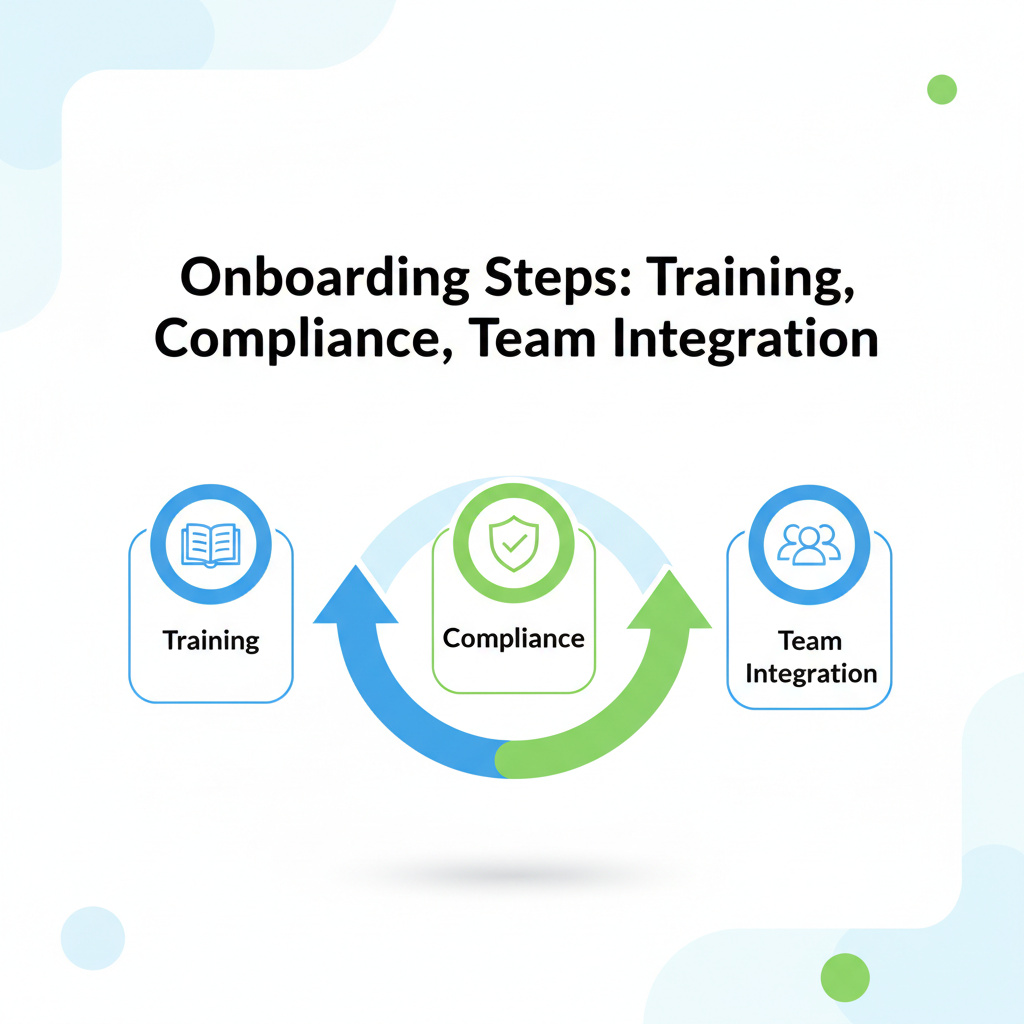
New hire turnover within the first six months is a silent budget leak most organizations overlook. Poor onboarding experiences and inconsistent processes exacerbate the problem across departments. Automated onboarding platforms standardize the integration journey, improving retention while eliminating administrative waste that drains HR budgets.
In today’s fast-paced tech landscape, where automation and AI drive efficiency, employee onboarding stands out as a prime candidate for digital transformation. Training automation tools turn fragmented manual processes into streamlined systems. For tech enthusiasts and Vibecoders exploring AI applications, learning automation enhances staff development, building resilient teams from day one.
Streamlining the Onboarding Process with Automation
Automated onboarding leverages AI to handle repetitive tasks, allowing HR teams to focus on strategic growth. Imagine a new engineer joining your startup: instead of chasing paperwork or scheduling endless meetings, the system instantly provisions access to code repositories, assigns role-specific training modules, and schedules virtual orientations. This shift reduces onboarding time by up to 50%, according to benchmarks from platforms like BambooHR. Companies like Google use similar systems to integrate thousands of hires annually, ensuring consistent staff development.
Boosting Productivity and Reducing Costs
One of the most compelling benefits is boosting productivity right from the start. Traditional onboarding often leaves new employees waiting for approvals or materials, delaying their contributions. With onboarding automation, self-service portals and AI-driven chatbots provide instant access to resources. New hires can complete compliance videos, explore company policies, and dive into tutorials at their own pace. Research from the Aberdeen Group shows that organizations using these tools see new employees reaching full productivity 34% faster than those relying on manual methods.
Cost savings are another undeniable advantage, especially for resource-strapped tech firms. Manual onboarding can cost upwards of $4,000 per hire when factoring in administrative time and error corrections. Automated platforms reduce these expenses by digitizing everything from e-signatures to virtual simulations. A study by the Society for Human Resource Management (SHRM) highlights that companies adopting learning automation cut onboarding costs by 60% on average. For instance, Slack’s automated onboarding reduced HR processing time by 70%, freeing staff to innovate rather than administrate.
Enhancing Data Accuracy and Compliance
Beyond finances, automated onboarding elevates data accuracy and security—critical in an era of rising cyber threats. Manual entry invites errors, with studies estimating a 1-2% error rate in data transcription that can lead to compliance issues. Training automation systems use validation algorithms to ensure clean inputs, while blockchain-inspired audit trails track every interaction. For tech enthusiasts, this means integrating AI for anomaly detection, preventing breaches before they occur.
Compliance remains a persistent headache for growing organizations, but smart automation turns it into a strength. Automated platforms enforce mandatory steps, such as policy acknowledgments, with built-in reminders. When regulations shift—like new remote work laws—updates propagate instantly, minimizing risk. According to Deloitte’s HR trends report, firms with automated compliance cut audit preparation time by 40%, avoiding fines and building trust.
Ensuring Consistency and Employee Engagement
Consistency is a game-changer for employee experience, particularly in diverse tech environments. Departmental silos often lead to uneven onboarding. Employee onboarding platforms deliver uniform journeys, from interactive welcome videos to customized development modules. Research from Gallup indicates that consistent experiences improve retention by 50%, as employees feel valued regardless of location or role.
Empowering employees through autonomy enhances engagement. Rather than passive recipients of information dumps, new hires actively navigate automated training paths, reducing overwhelm and boosting confidence. A Brandon Hall Group survey found that 52% of HR leaders see technology as key to employee empowerment in onboarding. Companies like Netflix use learning automation to let hires explore content libraries independently, resulting in higher satisfaction scores.
Leveraging Automation for Efficiency and Insights
Automated workflows orchestrate tasks like provisioning laptops, enrolling in benefits, and deploying feedback surveys. These run in parallel, compressing what used to take weeks into days. Integration with learning management systems (LMS) tailors content—developers get coding challenges, while designers access UI/UX simulations.
Real-time analytics add intelligence that pure automation lacks. Dashboards track progress and flag bottlenecks, providing metrics on ROI, such as time-to-productivity. For AI enthusiasts, predictive analytics forecast retention risks based on engagement data. Organizations like Microsoft leverage these insights to refine processes, turning onboarding into a data-driven powerhouse.
This technology also shapes your brand from the first touchpoint. A seamless interface signals a forward-thinking company, while clunky systems can sour impressions. In remote setups, automation bridges gaps, delivering virtual tours or AR-based guides to global teams. For Vibecoders, embracing this means crafting user-centric experiences that reflect your tech prowess.
Looking ahead, the fusion of onboarding automation with emerging AI promises even greater strides. By standardizing training and onboarding, organizations not only curb turnover and costs but cultivate thriving, adaptive workforces. For tech leaders ready to evolve, implementing these systems isn’t just efficient—it’s essential for sustained growth. Start small, measure impact, and watch your teams accelerate.
Book a 15 minute discovery call to find out more today at https://digifidelis.com/calendar/