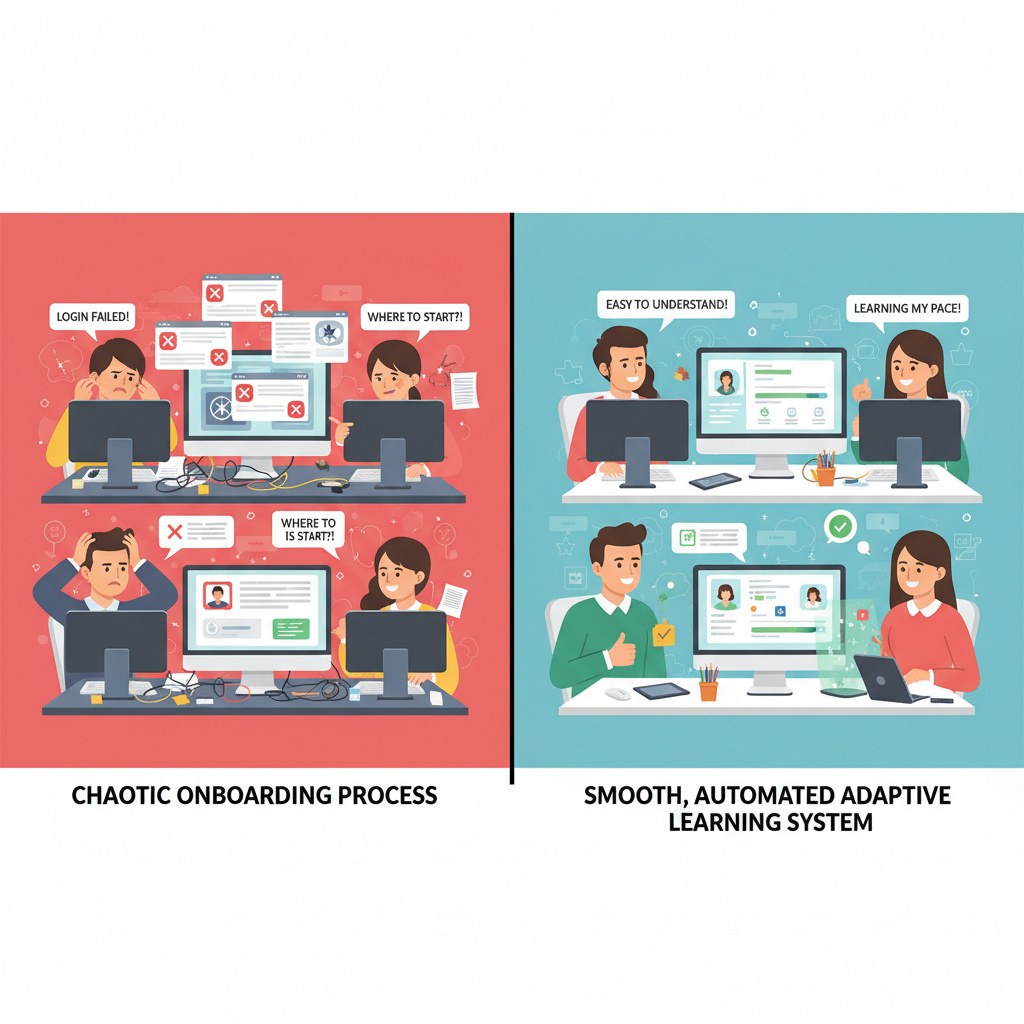
One-size-fits-all training videos and generic checklists don’t cut it for tech teams. Adaptive learning automation delivers personalized training paths that respect existing skills while filling gaps, ensuring faster ramp-up times and higher engagement.
In the fast-paced world of tech, traditional onboarding methods often leave new hires overwhelmed with irrelevant information. Adaptive learning automation changes this by leveraging AI to create dynamic, role-specific experiences. For Vibecoders—those creative technologists blending coding with artistry—this means training that resonates with their unique style, incorporating gamified elements and real-time feedback.
The essence of effective onboarding lies in seamless integration. Automation streamlines administrative tasks like account provisioning, giving new hires instant access to essential tools. No more delays or bureaucratic hurdles. According to Gallup, strong onboarding practices boost retention by 82%, and automation accelerates time-to-productivity.
Consider how learning automation works. AI algorithms assess incoming skills through quick evaluations or integrations with platforms like LinkedIn. They then generate tailored paths: a senior developer skips foundational modules and dives into advanced topics, while a junior designer focuses on tool-specific tutorials. This approach ensures training is efficient and impactful. Tools like Axonify excel in this space, using microlearning to fit into busy schedules and reducing training time by up to 50%.
Personalization goes beyond initial assessments. Automated systems track progress, adjusting content based on performance. If a new hire excels, the system introduces deeper challenges; if gaps appear, it reinforces with additional resources. This data-driven efficiency is especially appealing to tech-savvy teams like Vibecoders. Deloitte found that personalized learning boosts engagement by 30%, leading to quicker proficiency and lower turnover.
Real-world examples highlight these benefits. Rippling, an all-in-one HR platform, automates everything from payroll to device setup. One tech startup using Rippling reduced onboarding from two weeks to one day, with new hires contributing immediately. Similarly, Waybook’s skill-based paths have improved engagement in creative agencies by adapting to individual strengths.
For frontline roles, platforms like Axonify shine. In high-volume hiring, they deliver daily nudges via mobile apps, ensuring knowledge retention without overwhelming users. A logistics firm reported a 25% drop in turnover after implementing this approach, as new staff ramped up faster.
Rolling Out Adaptive Learning Automation
To roll out adaptive learning automation, start by mapping your onboarding process. Break it into stages: pre-boarding for paperwork, orientation for culture, core training with personalized modules, and ongoing support with reminders. Set measurable goals, like reducing onboarding time by 40%, and identify tasks to automate, such as scheduling and notifications.
Integration and Challenges
Integration is key. Pair automation with tools like Microsoft 365 for smooth setups or Slack bots for real-time support. For Vibecoders, choose platforms that align with creative workflows, embedding training in familiar environments. Balance efficiency with personal touches, like assigning onboarding buddies and sending welcome kits.
Challenges may arise, such as securing buy-in. Demonstrate ROI by showing how automation reduces errors or frees up HR for meaningful interactions. Start small with pilot programs, measure success, and scale. Track metrics like time-to-first-contribution and training completion rates.
The Future of Onboarding Automation
Looking ahead, the future of onboarding automation promises smarter integrations. Predictive AI will analyze hiring data to anticipate needs, while virtual reality could offer immersive training experiences. For seasonal roles, tools like Paylocity will ensure smooth scaling without losing personalization.
Ultimately, adaptive learning automation empowers tech teams to focus on innovation. By replacing outdated methods with AI-driven personalization, organizations accelerate onboarding and foster lasting development. The result? Engaged, productive teams ready to drive progress.
Book a 15 minute discovery call to find out more today at https://digifidelis.com/calendar/