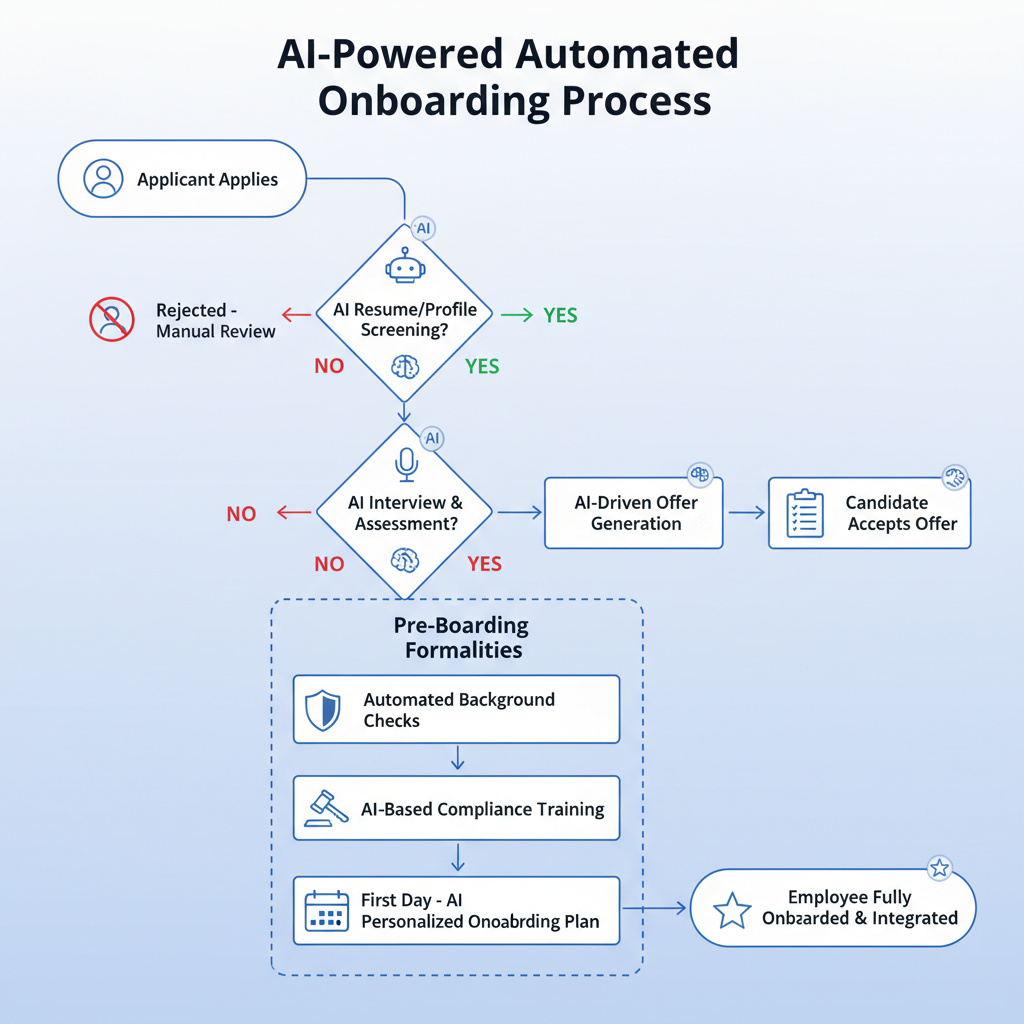
Training automation just leveled up. Agentic AI systems now orchestrate entire onboarding workflows—triggering actions across HR, IT, and management in real time, flagging at-risk employees before they disengage, and personalizing learning paths based on behavior and skill gaps. For tech teams and automation enthusiasts, this means API-native platforms, CI/CD integration, and a chance to build custom learning engines that scale without manual intervention.
This evolution marks a significant turning point for how organizations approach staff development, particularly within the fast-paced tech industry. By 2026, training and onboarding automation are poised to become indispensable, leveraging intelligent systems to dramatically reduce the time it takes for new hires to become productive. This not only boosts retention rates but also allows companies to scale their development programs without a proportional increase in headcount. The core of this transformation lies in AI-powered tools that can tailor learning experiences, alleviate administrative burdens, and deliver measurable results throughout the employee lifecycle.
AI-Driven Role-Based Onboarding
One of the most impactful trends is AI-driven role-based onboarding. These systems dynamically adapt training content based on an individual’s existing skills, their observed behavior within systems, and their actual product usage. Platforms like Litmos are at the forefront, incorporating predictive activation scoring. This feature helps identify employees or even customers who might be at risk of disengagement before it happens. Coupled with AI-generated summaries of complex information, personalized quizzes that test comprehension, and instant search capabilities within learning materials, this approach moves far beyond static, one-size-fits-all training. It fosters adaptive learning, accelerating the adoption of new knowledge and skills.
Multi-Audience Academies and Time-to-Value
The concept of multi-audience academies is also gaining traction. These centralized platforms aim to consolidate training for diverse groups, including customers, partners, and internal teams. By replacing siloed, disparate training platforms with unified AI learning management systems (LMS), organizations can offer a consistent, self-paced, and device-agnostic learning experience. This not only streamlines access to information but also significantly reduces the burden on support teams.
In this new landscape, time-to-value (TTV) is emerging as the ultimate metric for success. Automated systems are compressing onboarding timelines from weeks down to mere days. Reports from US Tech Automations indicate that some companies are now achieving one-day productivity ramps for new hires, a stark contrast to the traditional two-week period. This efficiency gain is often accompanied by a substantial reduction in HR administrative time, sometimes by as much as 65%. The structure of this automated training is also evolving. It typically includes pre-recorded videos for company overviews with auto-graded quizzes, self-paced modules for in-depth product knowledge, screen recordings demonstrating tool usage, and deadline-enforced compliance training. Research from SHRM suggests that a blended approach, combining approximately 60% digital self-paced content with 40% live sessions, can lead to a 34% increase in knowledge retention.
Agentic AI Orchestrates Workflows
Agentic AI takes automation a step further, moving beyond isolated tasks to orchestrate complex workflows. These AI agents can monitor an employee’s progress across various departments, including HR and IT, as well as their interactions with their managers. Phenom, for instance, highlights how these agents can trigger necessary actions, such as follow-ups for missed check-ins or interventions for project delays. Gartner predicts that by the end of the year, 40% of enterprise applications will integrate such agents. Their capabilities extend to automating data entry, managing system access, sequencing compliance requirements, and ensuring milestone check-ins are completed. This interconnectedness creates a seamless flow from recruiting through onboarding and into early learning, significantly minimizing the risk of employee turnover and enhancing overall engagement.
Integrating Modern Learning Principles
The principles of microlearning, gamification, and continuous onboarding are also being integrated to address the challenges of overloaded workdays and the complexities of hybrid work environments. TalentLMS reports that a significant majority of HR managers, around 62%, are already leveraging AI to automate tasks and bridge skill gaps, with a substantial 70% planning to create AI-related roles within their departments. While challenges such as concerns about the reliability of AI-generated content (cited by 22% of respondents) exist, they are being mitigated by robust integrations with HRIS systems, video tools, and data pipelines that ensure streamlined and efficient workflows.
LMS and AI-Powered Personalization
Learning management systems (LMS) are at the core of many of these training-led onboarding solutions. Platforms like TalentLMS, Litmos, Docebo, and Absorb LMS are specializing in automating role-based assignments, tracking progress, sending reminders, and providing detailed analytics. Complementing these LMS-first tools, platforms like Monday.com and Enboarder are introducing AI-powered routing to create highly personalized experiences. They can assign courses based on an employee’s specific role and location, and automatically escalate incomplete tasks. The scope of these high-impact automations is broad, covering essential onboarding elements such as document collection, IT provisioning, policy acknowledgments, equipment requests, and the assignment of onboarding buddies.
Opportunities for Tech Enthusiasts
For tech enthusiasts and vibecoders, the implications are particularly exciting. These advanced tools offer developer-friendly integrations and robust APIs, opening up possibilities for creating custom automations within CI/CD pipelines or low-code development environments. Staff development is profoundly enhanced by predictive analytics that can identify emerging skill gaps. This allows organizations to proactively implement upskilling initiatives, focusing on areas like AI collaboration and the adoption of new technology stacks before they become critical bottlenecks.
Key Implementation Strategies
Effective implementation strategies for these advanced automation systems prioritize centralization. This involves unifying content lifecycles with AI-powered authoring tools, automating manual tasks to keep pace with the rapid velocity of product releases, and diligently measuring key performance indicators such as retention rates, employee engagement, time-to-value, and overall productivity. Organizations that successfully blend technological efficiency with human interaction—using automation for frictionless processes and human expertise for coaching and mentorship—are positioning themselves for a significant competitive advantage. By 2026, the projected 81% of firms planning investments in AI-driven onboarding underscores its growing importance as the standard for scalable learning automation.
The Future of Continuous Training
This comprehensive automation paradigm does more than just optimize the initial employee onboarding process. It fundamentally redefines training as a continuous, data-driven engine for ongoing staff development. For tech-savvy teams, this means being exceptionally well-positioned to thrive and innovate within increasingly AI-augmented workflows, ensuring that talent development remains a strategic, agile, and impactful component of business success.
Book a 15 minute discovery call to find out more today at https://digifidelis.com/calendar/